
Elkins Previous Residents by Era
No single record follows an Elkins address from its first lot to today. Recent ownership is easiest to place through the assessor, parcel map, and deed index. Printed directories supply year-specific occupants for much of the twentieth century, while public census schedules add household detail. Maps, newspapers, and permits can bridge gaps. Finding previous residents means testing those records together, since agreement between two sources is stronger than one isolated name.
| Source | Local years covered | Where held | What it adds |
|---|---|---|---|
| County Clerk land records | Current access; earliest online year not published | Records room, LAREDO, Tapestry | Owners, transfers, legal descriptions, plats |
| Elkins city directories | 1923-24; 1957; 1961; 1964; 1969-78; 1981-96; 1998-2001; 2016 | WV State Archives; ask the library | Occupant, address, and business snapshots |
| NARA directories | 1921-24; 1926; 1929; 1933-34 | National Archives | Early Elkins and Randolph bridge years |
| Federal census | Through 1950 under the 72-year rule | NARA and library resources | Households at the census date |
| Sanborn maps | 1899, 1902, 1905, 1910, 1923 | WVU Archives | Footprints, uses, lots, and street numbers |
| City permits | Historical start not published | Elkins Building, Code and Zoning | Address, parcel, work type, owner or agent |
Begin with the source closest to the period. A current parcel is the right opening for recent previous residents, but a 1930s question is better tested against a directory, census, newspaper, and deed. The full shelf runs and entry formats belong to the Elkins city directory collections; here those books serve one address moving backward through time.
Anchor Elkins Address History
The WV Statewide Property Assessment can return an owner, physical address, mailing address, parcel, legal description, deed book and page, and prior sale fields. Keep the physical or situs address apart from the mailing address. Situs means where the parcel sits. A mailing address only shows where tax mail goes, and may belong to an estate, trust, company, joint owner, or owner living elsewhere.
Use the WV Property Viewer to confirm the E-911 address and parcel shape. Its detail panel can show community, description, owner, flood information, values, and an assessment link. The map is not legal title, and recent changes may lag. Save the parcel ID and legal wording before opening old records.
Note: A tax owner is not proof of who occupied the Elkins property, so every past-resident claim needs a second source.
Walk Randolph Deeds Backward
The Randolph County Clerk land-record page offers a public terminal, prepaid LAREDO access, and pay-per-search Tapestry. The terminal runs on regular business days from 8:00 a.m. to 3:30 p.m. The page does not state the earliest online year. A failed web query does not end the deed trail.
- Copy the current owner, parcel ID, deed reference, and legal description from assessment records.
- Find that owner's purchase deed. Save seller, buyer, date, book and page or instrument number, and prior-deed references.
- Search the seller as an earlier grantee, the person who received title in the prior transfer.
- Match the legal description before accepting the result, then repeat from transfer to transfer.
- When online results stop, ask for grantor and grantee indexes, old deed books, plats, and copies at the Clerk's counter.
- Grantor and grantee
- The grantor gives an interest in property; the grantee receives it.
- Chain of title
- The linked sequence of recorded transfers for the same property.
- Legal description
- Lot, block, subdivision, district, parcel, or boundary wording that identifies land more reliably than a street label.
The Randolph County history places Elkins within the older county-seat story.
That timeline helps explain why an old transfer may be indexed under county or Beverly context rather than a modern Elkins label.
Elkins History Beyond the Index
The online stopping point is unknown. Call the County Clerk at 304-636-0543 to ask about a named series, old volumes, plats, certified copies, and current charges. To place previous residents in social context, the Randolph County Historical Society collection holds county business and individual records, documents, and artifacts.
Those holdings do not replace the deed index. They may explain a prior owner, business use, civic event, or surname found in the legal trail. The Elkins-Randolph Public Library adds microfilm, yearbooks, maps, local documents, and Forest Festival programs. Call 304-637-0287 before asking for a year or reel because the library is serving from a temporary Randolph Avenue annex.
Beverly Extends Elkins History
Randolph County was created in 1786. Beverly was chartered in 1790 and served as the earlier county seat, while Elkins became the seat in 1900 after a three-year dispute. Elkins was incorporated in 1890 after the railroad reached town and a town plat was recorded in 1889. A nineteenth-century parcel or family may therefore appear under Beverly, a county district, or another old place label.
The Beverly Heritage Center research library holds local and Civil War history, original documents, manuscripts, and oral histories.
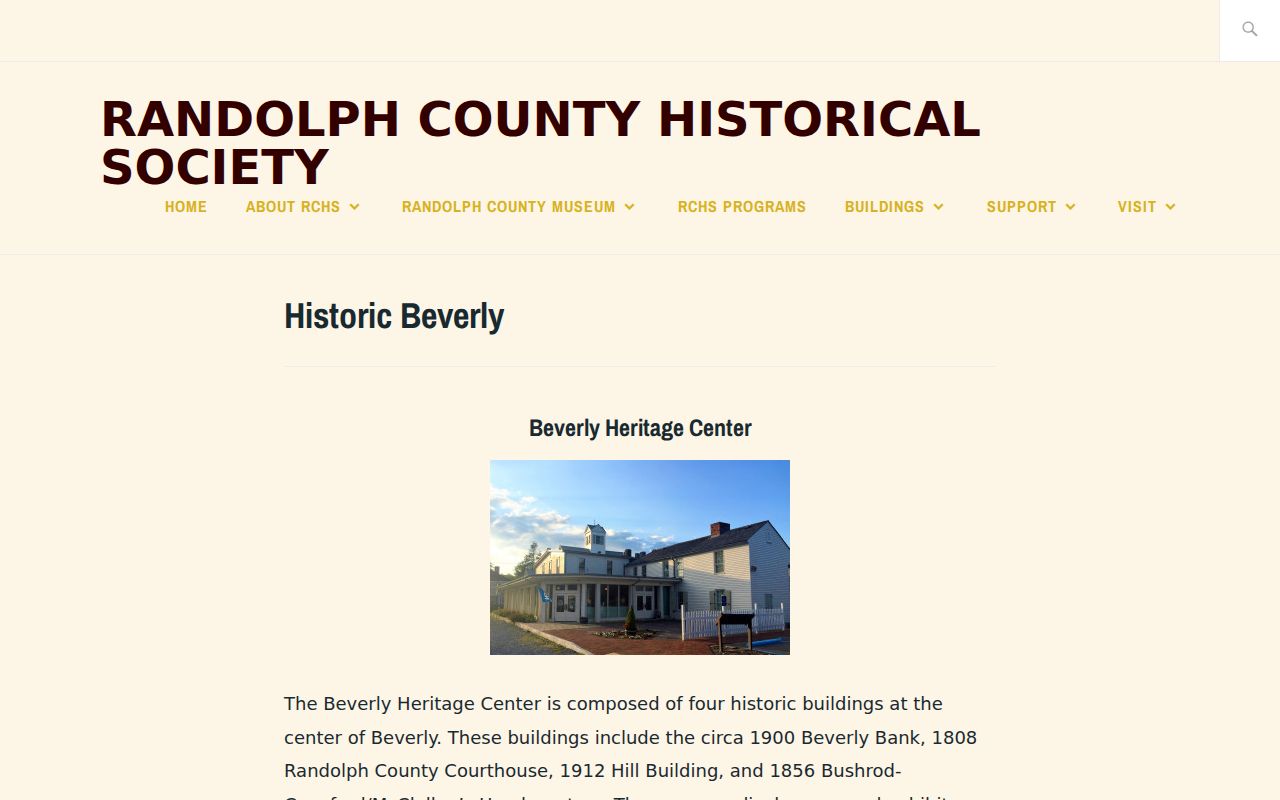
This is the local bridge when an Elkins name disappears before 1900. Search the county and both seats instead of treating the current city name as timeless.
Map Earlier Elkins Buildings
WVU lists Sanborn fire-insurance maps for Elkins in 1899, 1902, 1905, 1910, and 1923. They can show a footprint, material, number of stories, use, lot line, street name, and house or block number. If a building is absent in 1899 but present in 1902, the sheets narrow a construction window. They do not name occupants or establish title.
The March 17, 1897 downtown fire destroyed much of the original Davis Avenue business district, which was rebuilt in brick and stone. Treat it as a building-history pivot, not a courthouse records loss. Compare pre-fire newspapers and deeds with later maps before claiming continuity.
Track Three Elkins Clocks
Keep a legal clock, an occupancy clock, and a geography clock. The legal clock holds deed dates and descriptions. The occupancy clock holds directories, census, newspapers, obituaries, and permits. The geography clock holds incorporation, annexation, address changes, map updates, and postal labels. These dates need not match.
Elkins assigns and changes addresses inside city limits, then sends updates through county mapping and the state SAMS system. No official source gave a citywide renumbering year, so do not invent one. Compare the street, intersection, lot and block, legal description, Sanborn number, and current parcel when an old address fails. South Elkins also merged into Elkins in 1901.
Note: An absent name in a scattered directory run does not prove that the person had left Elkins.
Elkins Permits Mark Changes
The Elkins Building, Code Enforcement and Zoning Department is the municipal route for address-based files. Its application joins a street address to zoning district, District, Map and Parcel, proposed use, work type, and an owner or agent. Categories include new building, addition, replacement, razing, relocation, and signs.
No public permit-case index or coverage start was located. Ask for a defined address file through the custodian or Elkins FOIA process. Separate application, approval, inspection, correction, and completion dates. A blank form's checkbox does not prove that work occurred.
Confirm Elkins Past Households
Deeds identify interests in land, not everyone who lived there. To confirm previous residents, use this flow: deed owner to directory address, directory name to public census household, then name and date to newspapers or probate. Search the alphabetical and address sections of a directory. Record initials, spouse or widow notes, occupation, abbreviations, page, and year.
- Place the transfer on a timeline without assuming the move happened that day.
- Check the nearest directory year for the address and each party name.
- Use a public census year for the household on its census date, not the whole decade.
- Bridge gaps with newspapers, maps, yearbooks, obituaries, and permits.
- Require a shared address, relative, occupation, initial, or legal record before merging same-name people.
The Inter-Mountain has a near-continuous archive from 1915 to 2015 plus later segments. Randolph Enterprise spans several runs from 1878 to 1984. An obituary may supply relatives, a former street, church, cemetery, or occupation. Recorded estate instruments belong with the County Clerk; related court and guardianship files may require the Circuit Clerk.
Lawful use. Research previous residents for house history, genealogy, or personal curiosity. West Virginia law prohibits stalking and harassment meant to cause fear or serious distress.